


Views: 0 Author: Site Editor Publish Time: 2026-10-30 Origin: Site


Choosing between a gasoline and diesel generator depends on how much power you need, how often you operate it, and where you use it. Both types can provide reliable electricity when grid power is unavailable. However, they differ in fuel costs, engine design, maintenance requirements, and typical applications.
A gasoline generator is often suitable for portable power, occasional backup, and temporary outdoor work. A diesel generator is commonly considered for longer operating periods, demanding workloads, and commercial or industrial applications.
For equipment distributors, contractors, and project buyers, the right choice requires more than comparing purchase prices. You should also evaluate fuel consumption, operating hours, starting loads, maintenance, and total ownership costs.
This guide compares gasoline and diesel generators to help you select a suitable power solution for residential backup, construction sites, farms, workshops, and commercial facilities.
Gasoline and diesel generators use different engine combustion systems.
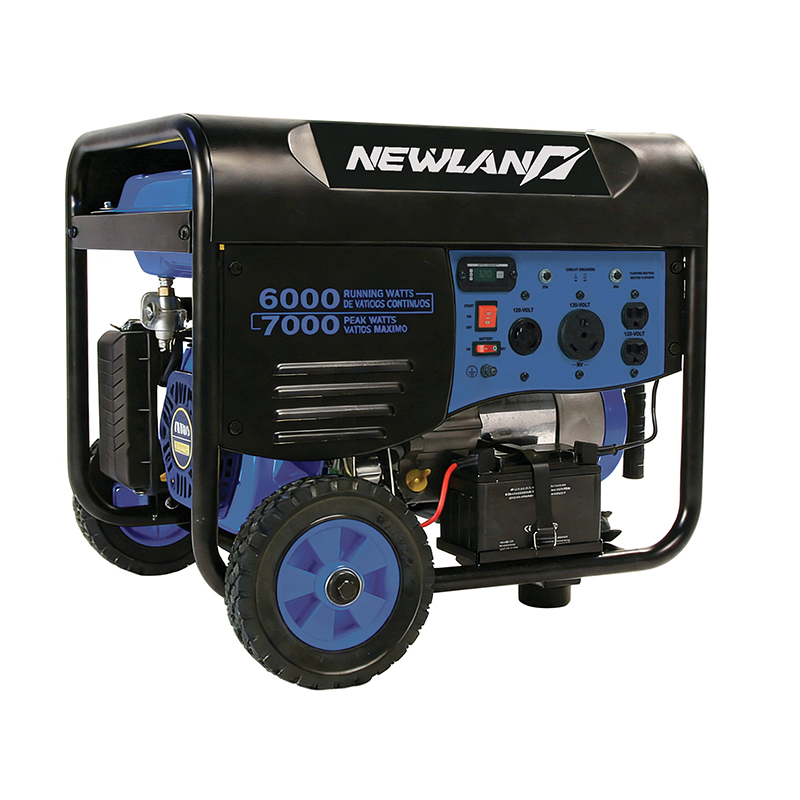
A gasoline engine uses spark ignition. It mixes air and fuel before a spark plug ignites the mixture. A diesel engine uses compression ignition. It compresses air to a high temperature and injects fuel into the cylinder to start combustion.
These differences affect engine design, fuel systems, maintenance, and operating characteristics.
Comparison Factor | Gasoline Generator | Diesel Generator |
|---|---|---|
Ignition | Spark ignition | Compression ignition |
Fuel | Gasoline | Diesel |
Typical Applications | Portable power, home backup, outdoor work | Construction, agriculture, commercial and industrial power |
Initial Cost | Often lower for comparable portable units | Often higher for comparable units |
Fuel Efficiency | Generally lower under comparable conditions | Generally higher under comparable conditions |
Maintenance | Includes spark plug and ignition system maintenance | Requires diesel fuel system and injection system maintenance |
Fuel Storage | More sensitive to oxidation and storage conditions | Requires water and microbial contamination control |
Operating Characteristics | Available in compact, portable designs | Available in portable and heavy-duty designs |
Actual performance depends on the generator model, engine design, power rating, and operating conditions.
Fuel consumption is an important factor when calculating generator ownership costs.
Gasoline generators are commonly selected for temporary power and occasional backup. Their purchase prices are often lower than those of comparable diesel units.
However, fuel consumption should be evaluated against the generator's actual electrical output. A generator operating at a light load may use fuel less efficiently than one operating closer to its suitable load range.
For buyers who use a generator occasionally, the lower purchase price may be more important than small differences in fuel consumption.
Diesel engines generally offer better fuel efficiency than comparable gasoline engines under similar operating conditions.
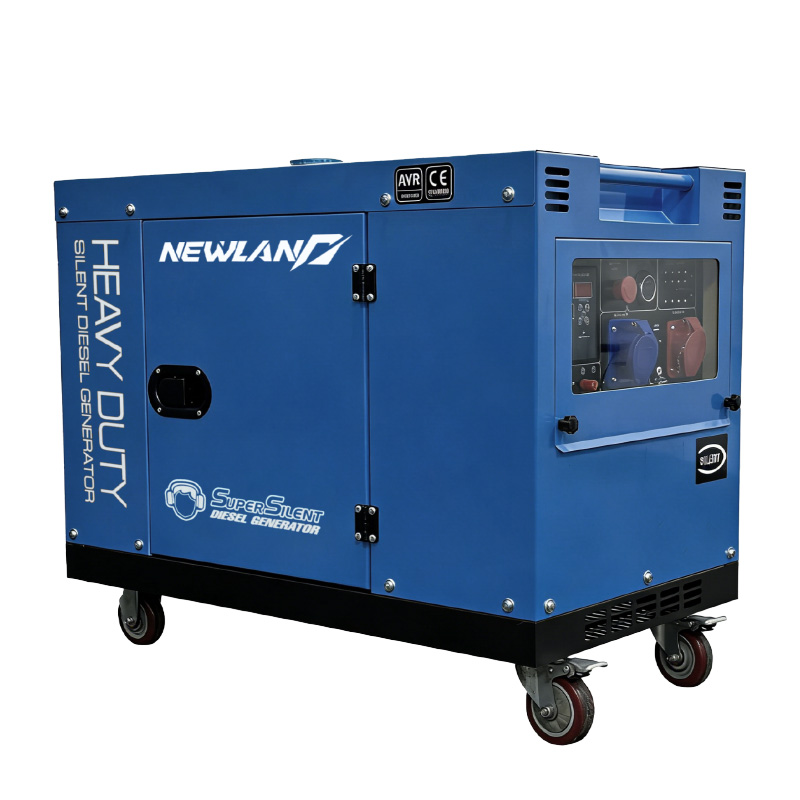
This can reduce fuel costs when a generator runs for extended periods or supports regular commercial operations.
However, the actual savings depend on the generator's load profile, engine specifications, fuel price, and maintenance costs.
Do not compare fuel consumption figures without checking their test conditions.
For a fair comparison, request fuel consumption data at the same load percentage, such as 50%, 75%, or 100% of rated output.
You can estimate operating fuel costs using this formula:
Operating Fuel Cost = Fuel Consumption per Hour × Operating Hours × Fuel Price
This calculation helps buyers compare different generator models under their expected working conditions.
The purchase price is only one part of generator ownership.
Gasoline generators often have a lower initial cost, especially in portable power categories. They can be a practical choice for buyers who need backup electricity without frequent operation.
Diesel generators may require a higher initial investment. However, their fuel efficiency and engine design can make them suitable for applications involving longer operating hours and heavier workloads.
When comparing the total cost of ownership, consider:
Initial equipment price
Fuel consumption and local fuel prices
Scheduled maintenance
Replacement parts
Expected operating hours
Transportation and installation costs
Service availability
Expected equipment service life
A lower purchase price does not always mean a lower long-term cost. Likewise, a more expensive diesel generator is not automatically the better investment.
The best option depends on how the equipment will be used throughout its service life.
Engine speed and construction influence generator performance, but they should not be compared by fuel type alone.
Generator speed is related to the number of alternator poles and the required output frequency.
For example, a conventional synchronous generator operating at 60Hz may use:
3600 RPM with a 2-pole alternator
1800 RPM with a 4-pole alternator
For 50Hz systems, the corresponding synchronous speeds are generally 3000 RPM and 1500 RPM.
Both gasoline and diesel generators can use different speed configurations. Buyers should check the specifications of the selected model rather than assume all gasoline units operate at 3600 RPM or all diesel units operate at 1800 RPM.
Diesel engines use compression ignition and are commonly designed for demanding operating conditions. Many commercial diesel generators feature robust engine structures and fuel injection systems.
Gasoline generators are available in a wide range of designs, from compact portable units to higher-output models.
Engine materials, cooling methods, maintenance intervals, and service life vary by manufacturer and model. These factors should be checked in the technical specifications.
Gasoline generators require attention to spark plugs, ignition components, fuel systems, engine oil, and air filters.
Diesel generators do not use spark plugs for ignition. However, they require proper care of fuel filters, injectors, fuel quality, engine oil, and air intake systems.
Neither type is maintenance-free. Following the manufacturer's service schedule is essential for reliable operation.
Fuel management is important for generators used in emergency backup and remote locations.
Gasoline is more volatile than diesel and requires careful storage and handling.
Stored gasoline can deteriorate over time. Ethanol-blended gasoline may also experience phase separation if it absorbs excessive water.
To reduce fuel-related problems:
Use approved fuel containers.
Store fuel in a suitable, well-ventilated location.
Follow local fire and fuel storage regulations.
Use fuel stabilizers when recommended by the manufacturer.
Rotate stored fuel according to the equipment manual.
Avoid storing gasoline near heat sources or ignition sources.
Diesel fuel is less volatile than gasoline, but it also requires proper storage management.
Water contamination can encourage microbial growth in diesel storage tanks. This may create sludge that blocks fuel filters and affects engine operation.
For long-term diesel storage:
Keep tanks clean and properly sealed.
Inspect tanks for water and sediment.
Check fuel condition periodically.
Use suitable fuel treatments when recommended.
Follow the engine manufacturer's storage instructions.
Neither fuel should be stored or handled without following local safety requirements.
Generator noise and portability depend on more than the fuel type.
Engine speed, cooling systems, exhaust design, enclosure structure, and load conditions all affect generator noise.
Open-frame generators generally provide easier access to major components but offer less sound insulation.
Silent generators use an enclosed canopy designed to reduce operating noise and protect internal components.
For residential areas, commercial buildings, or noise-sensitive jobsites, compare the specified noise level and measurement distance of each model.
Gasoline generators are commonly available in compact and lightweight configurations. They are useful for temporary work and locations where equipment needs to be moved frequently.
Diesel generators are available in both portable and heavy-duty designs. Their weight varies according to engine size, cooling system, fuel tank, frame, and enclosure.
When selecting a generator for mobile use, check:
Overall dimensions
Net and gross weight
Wheel and handle design
Frame construction
Fuel tank capacity
Starting method
Access for maintenance
Diesel generators also differ in cooling design.
Air-cooled models have a relatively straightforward cooling structure and are commonly used for portable, general-purpose, and outdoor power applications.
Water-cooled models use a coolant and radiator system. They are often considered for higher power requirements and extended operating periods.
The correct cooling system depends on the selected generator's rated output, duty requirements, installation conditions, and maintenance plan.
The best fuel type depends on the application and expected operating conditions.
Gasoline generators are a practical option for occasional home backup. They can supply temporary power to compatible appliances, lighting, and essential equipment.
Buyers should calculate the total running load and account for the starting power of refrigerators, pumps, and other motor-driven appliances.
For longer backup periods, diesel generators may also be suitable. The decision should consider fuel storage, runtime, noise, installation space, and maintenance requirements.
Construction sites often need generators for power tools, lighting, pumps, compressors, and temporary site facilities.
Gasoline generators can be suitable for mobile crews and temporary tasks where portability and convenient deployment are important.
Diesel generators are commonly considered for demanding workloads and longer operating periods. Their suitability depends on the required power output, load profile, fuel availability, and operating environment.
For either type, check the starting requirements of motors and compressors before choosing a generator capacity.
Farms may need generator power for irrigation pumps, workshops, lighting, and other equipment.
Gasoline generators can support temporary and mobile power requirements.
Diesel generators may be more suitable for regular operation and higher-demand equipment, depending on the operating hours and fuel supply.
The generator should be selected according to pump starting current, total load, runtime, and environmental conditions.
Commercial facilities and industrial operations may require generators for essential equipment, production support, lighting, and emergency power.
Diesel generators are frequently considered for these applications because they are available in a wide range of power capacities and configurations.
For extended backup requirements, buyers should also evaluate cooling systems, automatic transfer switch compatibility, fuel storage, installation, and maintenance support.
Gasoline generators can still serve smaller commercial loads and temporary backup requirements when their capacity and operating specifications are suitable.
Before purchasing a generator, evaluate the following factors.
Selection Factor | Questions to Ask |
|---|---|
Power Requirement | What is the total running load? |
Starting Power | Do motors, pumps, or compressors require additional starting capacity? |
Operating Hours | Will the generator run occasionally, daily, or for extended periods? |
Fuel Availability | Which fuel is easier to obtain at the operating location? |
Purchase Budget | What is the available initial investment? |
Operating Cost | What are the expected fuel and maintenance costs? |
Installation | Is the generator portable, stationary, open frame, or enclosed? |
Electrical Configuration | Does the model match the required voltage, frequency, and phase? |
Service Support | Are spare parts and maintenance services available? |
You need portable or temporary power.
The generator will be used occasionally.
Initial purchase cost is a major consideration.
Equipment needs to be moved between work locations.
The required output is available in a suitable gasoline model.
Explore NEWLAND gasoline generators to compare available power ranges and configurations.
The application requires regular or extended operation.
Fuel efficiency is important for long operating hours.
The generator needs to support demanding commercial or industrial loads.
Diesel fuel is readily available at the operating location.
The selected model meets the required power and duty specifications.
Explore NEWLAND air-cooled diesel generators and water-cooled diesel generators to compare different configurations.
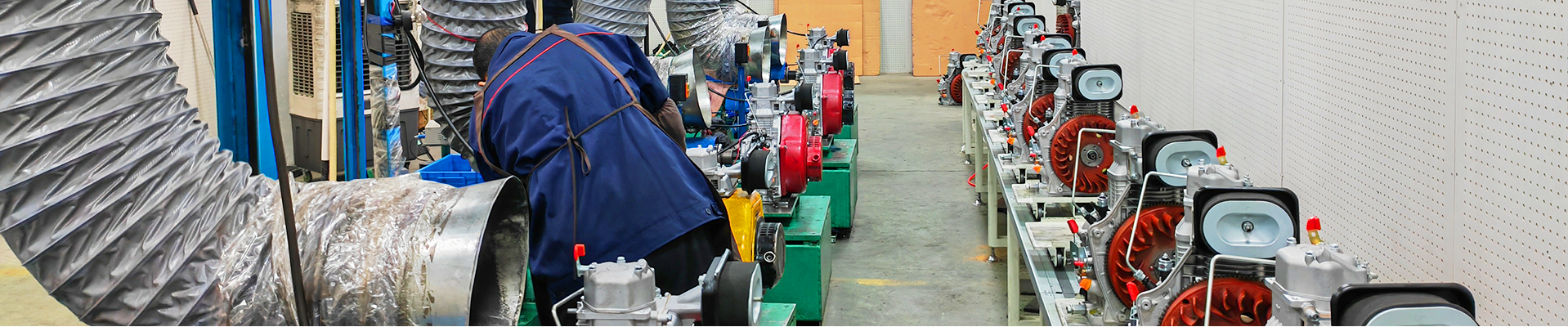
Both gasoline and diesel generators can provide dependable backup and jobsite power when properly selected and maintained.
Gasoline generators are often suitable for portable power, occasional backup, and temporary work. Diesel generators are commonly considered for longer operating periods, demanding loads, and commercial or industrial applications.
However, fuel type alone does not determine generator performance. Power output, starting capacity, engine design, cooling system, fuel consumption, and maintenance requirements all matter.
Before making a purchase, compare generator specifications against your actual load and operating schedule. This approach helps reduce unnecessary costs and ensures the selected equipment meets your power requirements.
Looking for a suitable generator for your market or project? Explore NEWLAND's gasoline and diesel generator range or contact our team to discuss power requirements, configurations, and OEM/ODM options.
Both can provide home backup power. Gasoline generators are often suitable for occasional and portable use, while diesel models may be considered for longer operating periods. The right choice depends on power demand, runtime, budget, fuel storage, and installation conditions.
Diesel generators generally offer better fuel efficiency under comparable operating conditions. However, actual fuel consumption depends on generator size, load percentage, and engine design. Compare model-specific fuel consumption data at the same load.
Both types can be used on construction sites. Gasoline models are useful for portable and temporary power, while diesel models are often considered for demanding workloads and longer operating periods. Always check motor starting requirements and the generator's rated output.
Some diesel generators are designed for extended operation, but continuous running capability depends on the model's rating, load, fuel capacity, cooling system, and maintenance schedule. Buyers should check the manufacturer's duty rating and operating instructions.
Check rated power, maximum power, starting capacity, fuel consumption, expected runtime, voltage, frequency, phase, noise level, cooling method, and maintenance requirements. Also confirm that the generator meets the electrical and regulatory requirements of the destination market.


