


Views: 0 Author: Site Editor Publish Time: 2026-09-08 Origin: Site


Table of Contents
Power-related downtime on an active job site creates a compounding financial impact that quickly derails project timelines. When voltage drops occur, sensitive equipment sustains damage, heavy machinery stalls, and entire crews are left waiting. The core problem usually stems from a mismatch in generator capacity. Under-sizing your power source leads to constantly tripped breakers and stalled operations. Conversely, over-sizing results in excessive fuel burn, wet stacking, and premature engine wear that compromises reliability. Selecting the right equipment requires moving beyond simple wattage estimates. Project managers must apply a systematic framework for evaluating peak power demands, physical configuration types, strict emissions compliance, and actual installation realities. By accurately mapping these variables, you can deploy a diesel generator for construction site operations that maintains continuous, stable power under the harshest environmental conditions.
Accurate sizing requires calculating both the steady-state running wattage and the peak starting (surge) demand of all simultaneous equipment.
Construction applications require "Prime Power" rated generators, designed for continuous operation under variable loads, rather than "Standby" units meant only for emergency backup.
Site mobility requirements dictate the configuration choice, ranging from skid-mounted and towable units to stationary containerized systems.
Fuel tank capacity and load-specific burn rates are the primary drivers of operational continuity, especially for unattended overnight operations like dewatering or concrete curing.
Emissions compliance (e.g., EPA Tier 4 Final) and sound attenuation are strict prerequisites for urban, municipal, or heavily regulated project environments.
Diesel engines remain the undisputed industry standard for heavy-duty off-grid power generation. Compared to natural gas or propane alternatives, diesel fuel offers a significantly higher energy density. This translates directly to slower fuel burn rates and extended runtimes between refueling intervals. More importantly, diesel engines produce the high torque necessary to handle massive motor-starting surges without bogging down or stalling. When a tower crane or heavy-duty compressor kicks on, the power source must instantly absorb that massive spike in demand.
Site safety also heavily favors diesel. The fuel has a lower flammability risk compared to highly volatile gasoline, making it safer to store in large quantities on active sites where sparks from welding and cutting are constant. Furthermore, the sheer durability of a heavy-duty Diesel Generator allows it to withstand continuous, multi-shift operations in environments choked with dust, moisture, and extreme temperature fluctuations. Internal components are engineered with tighter tolerances and heavier materials specifically designed to run thousands of hours before requiring major overhauls. You simply cannot get this level of rugged reliability from light-duty gas inverters.
Accurate sizing begins by distinguishing between steady-state running loads and motor-starting surge requirements. Running wattage represents the continuous power needed to keep equipment operating. Starting wattage, however, can spike to three or four times the running wattage for a few seconds when heavy electric motors engage. Failing to account for this surge is the primary reason breakers trip and sites lose power during critical lifts or pumping operations.
To establish a maximum simultaneous load profile, you must conduct a comprehensive audit of all site equipment. Follow these specific steps to calculate your true power requirements:
List every tool, compressor, welder, lighting tower, and pump that might run concurrently during your busiest shift.
Check the manufacturer data plates on each piece of equipment to find the running wattage and the starting wattage (sometimes listed as Locked Rotor Amps or LRA).
Identify the single largest motor on your site. Record its starting wattage.
Add the running wattage of all other active equipment to that single highest starting wattage. This calculation yields your absolute peak power demand.
Equipment Type | Average Running Watts | Estimated Starting Watts |
|---|---|---|
Air Compressor (5 HP) | 4,000 W | 12,000 W |
Industrial Welder (400 Amp) | 9,000 W | 9,000 W (No surge) |
Submersible Water Pump (3 HP) | 2,500 W | 7,500 W |
Concrete Vibrator | 1,500 W | 4,500 W |
LED Light Tower (4-head) | 1,200 W | 1,200 W |
Once you determine the peak demand, apply the 80% rule. You must size the unit so that normal, daily operations consume between 70% and 80% of its maximum rated capacity. Running an engine continuously at 100% capacity accelerates wear and increases the risk of overheating. Operating in the 80% sweet spot optimizes fuel efficiency, maintains proper operating temperatures, and leaves enough overhead to absorb unexpected power spikes safely.
Understanding the distinction between Prime Power and Standby Power ratings prevents catastrophic equipment failure. Prime Power units are engineered specifically for unlimited hours of use at variable loads. They serve as the primary utility source when grid power is unavailable. The cooling systems, alternators, and engine blocks in these units are built to handle continuous thermal stress day after day. They feature heavy-duty radiators and oversized oil pans to manage heat dissipation during long shifts.
Standby Power units are designed strictly for emergency backup during temporary utility outages. They are rated to run for a limited number of hours per year, typically under consistent, predictable loads. Deploying a Standby-rated unit as the primary power source on a construction site will rapidly degrade the engine. The continuous thermal load will overwhelm the cooling system, leading to warped cylinder heads and blown gaskets. Furthermore, using a Standby unit for Prime applications immediately voids manufacturer warranties, leaving the project liable for all replacement and repair logistics.
Matching the electrical output to your specific machinery requires choosing between single-phase and three-phase power. Most heavy construction equipment, such as large concrete vibrators, industrial hoists, and heavy-duty welders, demands three-phase power for efficient operation. Three-phase systems deliver power continuously without the peaks and valleys inherent in single-phase delivery, allowing large motors to run smoother and cooler. Always verify the voltage and phase requirements on the data plates of your heaviest machinery before finalizing a power source. Many modern units offer switchable voltage, allowing operators to toggle between single and three-phase output depending on the day's tasks.
Load profiling also mitigates the severe risk of wet stacking. When a diesel engine runs consistently on variable or light loads (typically below 30% of its rated capacity), it fails to reach its optimal operating temperature. Unburned fuel and carbon particles bypass the piston rings and accumulate in the exhaust system, forming a thick, dark sludge. This condition drastically reduces engine efficiency, creates fire hazards, and eventually destroys the exhaust system. Proper sizing prevents this. If light loads are unavoidable during certain project phases, scheduled load banking becomes a mandatory maintenance procedure. Load banking involves connecting the unit to an artificial load bank machine to run the engine at 100% capacity for a few hours, effectively burning off all accumulated carbon deposits.
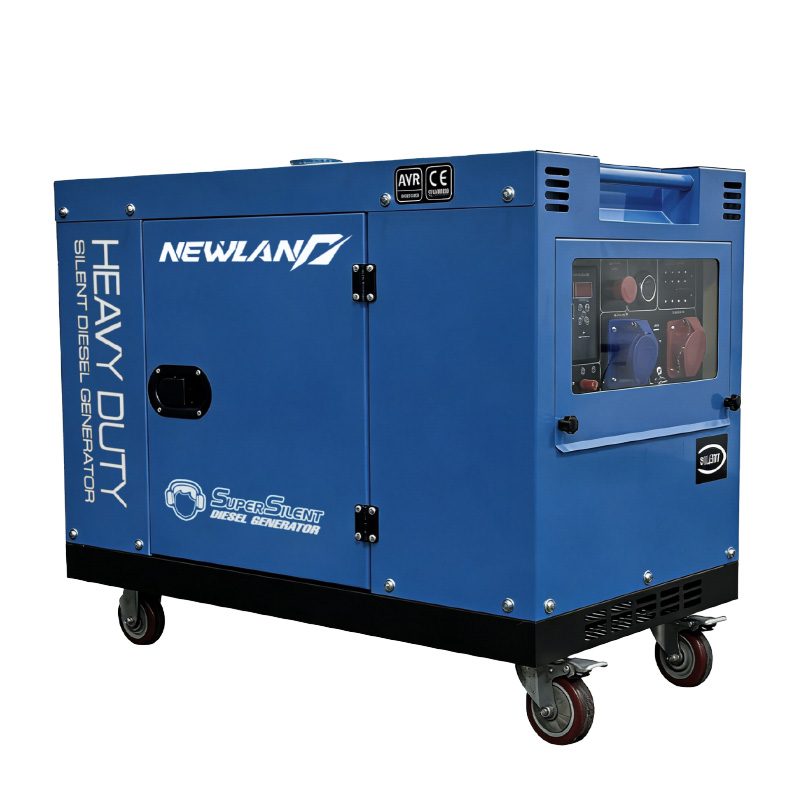
Towable units dominate highway construction, sprawling infrastructure projects, and pipeline installations where the power source must follow the active work zone. Mounted on robust, DOT-approved trailer chassis, these units allow crews to hitch up and reposition power daily without waiting for heavy material handlers. They come equipped with standard pintle hitches, electric or surge brakes, and heavy-duty axles designed to handle rough, unpaved site roads.
The primary trade-off involves the upfront capital required for the integrated trailer system and the necessity of having dedicated towing vehicles on site. Additionally, their inherent mobility makes them highly susceptible to theft. Securing towable units requires heavy-duty wheel locks, hitch locks, and strategic overnight placement within fenced, well-lit staging areas. You must also account for the physical footprint of the trailer tongue and wheels when placing the unit in tight urban alleys.
Skid-mounted configurations serve mid-size commercial builds and semi-permanent placements perfectly. Built inside heavy-duty steel frames with integrated lifting eyes and forklift pockets, these units offer a highly durable, compact footprint. They take up less physical space than towable models, making them ideal for tight urban lots or crowded staging areas where every square foot matters. The rigid frame protects the internal components from accidental impacts by heavy machinery.
The limitation lies in relocation logistics. Moving a skid-mounted unit requires coordinating a heavy-duty forklift, telehandler, or crane. While they offer excellent stability and durability against site impacts, they are not suited for projects requiring daily power repositioning. Once dropped on a leveled pad, they generally stay there until that specific phase of construction concludes.
Multi-year mega-projects, base camp infrastructure, and sites operating multiple tower cranes rely on containerized units. Housed within modified 20-foot or 40-foot ISO shipping containers, these massive systems deliver maximum power output. They often feature oversized internal fuel tanks capable of sustaining operations for days without refilling. The container itself provides unmatched security and weather protection, completely isolating the engine from site dust and unauthorized access.
Deploying containerized power involves significant logistical planning. Delivery requires heavy haul transport, and placement demands a prepared, leveled concrete or compacted gravel pad capable of supporting immense weight. The setup and eventual removal processes are complex, requiring heavy-duty cranes and specialized rigging crews. However, for long-term, high-demand applications, the continuous, uninterrupted power output easily justifies the initial deployment effort.
Configuration Type | Best Use Cases | Primary Advantages | Key Trade-offs |
|---|---|---|---|
Towable / Trailer-Mounted | Highway work, pipeline projects, daily repositioning | Maximum mobility, DOT-approved transport | Higher theft risk, requires towing vehicles |
Skid-Mounted | Mid-size commercial, tight urban lots | Compact footprint, rugged frame protection | Requires heavy equipment (forklift/crane) to move |
Containerized | Mega-projects, tower cranes, base camps | Massive power output, extended fuel capacity | Complex delivery logistics, requires prepared site pad |
Modern job sites operate under strict environmental scrutiny. The EPA Tier 4 Final standard mandates drastic reductions in particulate matter and nitrogen oxide emissions from off-highway diesel engines. Compliance is no longer optional. Municipal inspectors actively enforce these regulations, and failing to meet them results in immediate site shutdowns and heavy fines. You must verify that any equipment brought onto a regulated site carries the proper Tier 4 Final certification plates.
Operating Tier 4 Final equipment introduces new maintenance variables. These engines utilize complex emissions control systems, including Diesel Exhaust Fluid (DEF) injection and Diesel Particulate Filters (DPF). Site managers must maintain a clean, uncontaminated supply of DEF and monitor fluid levels closely. DEF freezes at 12°F (-11°C), so winter storage requires climate-controlled environments. Additionally, the DPF requires periodic regeneration cycles—a process where exhaust temperatures are artificially raised to burn off trapped soot. Operators must understand how to initiate and monitor these active regeneration cycles to prevent the engine from derating or shutting down mid-shift.
Fuel logistics dictate operational continuity. Evaluating fuel efficiency requires analyzing burn rates, typically measured in gallons per hour (GPH) at both 50% and 100% load capacities. Correlating these burn rates with your standard shift lengths determines how often refueling trucks must access the site. Efficient engines operating in their optimal load range significantly reduce the frequency of fuel deliveries, minimizing site traffic and logistical overhead.
Tank sizing directly impacts unattended operations. Standard integrated base tanks usually provide 8 to 24 hours of runtime at a 75% load. However, applications like continuous dewatering, overnight concrete curing, or winter ground thawing demand uninterrupted power for days. In these scenarios, integrating external auxiliary fuel tanks becomes necessary. Setting up an auxiliary system requires specific steps:
Position the external double-walled tank on a level surface near the primary unit.
Install secure containment berms around the external tank to prevent environmental spills.
Route heavy-duty fuel lines, ensuring they are protected from vehicle traffic.
Install automated transfer pumps and float switches to maintain levels in the primary tank without overflowing.
Urban construction sites face stringent noise ordinances. Hospitals, residential neighborhoods, and school zones strictly regulate allowable decibel levels. Sound-attenuated enclosures are engineered with specialized acoustic baffling, thick foam insulation, and redirected exhaust routing to dampen engine noise. When evaluating enclosures, check the dBA rating measured at 7 meters (23 feet) under full load to ensure compliance with local municipal codes. A rating of 65 to 68 dBA is generally acceptable for most urban environments.
Beyond noise control, enclosures provide critical weatherproofing. Construction environments subject equipment to extreme temperature swings, driving rain, and highly abrasive concrete dust. Marine-grade aluminum or heavy-gauge steel enclosures with powder-coated finishes prevent rust. Specialized air intake louvers and heavy-duty filtration systems stop dust ingress from destroying internal engine components and clogging alternators. Ensure the enclosure doors feature heavy-duty gaskets and lockable latches to keep moisture and unauthorized personnel out.
Modern power generation relies heavily on data. Telematics systems provide project managers with real-time visibility into equipment health from any location. These systems track exact fuel levels, monitor active load capacities, and send automated alerts for upcoming maintenance intervals or required DPF regenerations. This proactive data stream prevents unexpected shutdowns caused by running dry or ignoring critical engine warnings. You can log into a dashboard on your phone and see exactly how many amps the site is pulling at any given moment.
Telematics also serve as a vital security measure. GPS tracking capabilities allow fleet managers to geofence equipment. If a unit moves outside the designated site boundaries, the system instantly triggers an alarm and sends an SMS notification. In the event of theft, precise GPS coordinates drastically increase the likelihood of rapid equipment recovery, mitigating massive replacement delays and insurance headaches.
Proper installation prevents operational hazards before the engine ever turns over. Site preparation requires a compacted, leveled surface to ensure proper fluid circulation within the engine block. Operating on an incline starves the oil pump, leading to catastrophic internal friction and seized pistons. Vibration isolation mounts must be inspected to prevent the unit from literally shaking itself apart or damaging connected rigid conduits during heavy load transitions.
Safety compliance dictates mandatory grounding. A dedicated grounding rod must be driven deep into the earth and properly bonded to the chassis to provide a safe path for fault currents. For complex off-grid setups utilizing auxiliary fuel systems, installation requires meticulous plumbing. Technicians often route 1/4-inch copper fuel lines, intentionally omitting check valves where backflow prevention is unnecessary, to ensure smooth fluid dynamics. Installing inline 12 VDC fuel pumps and normally open pressure switches allows for seamless, automated fuel integration without starving the injection system.
Generating power is only the first step; distributing it safely across a sprawling site presents entirely different challenges. Heavy-duty spider boxes serve as the distribution hubs, breaking down high-amperage feeds into usable 120V and 240V receptacles for hand tools and lighting. Cabling must be strictly gauged according to the distance of the run. Using undersized cables over long distances causes severe voltage drop. When voltage drops, tool motors pull more amperage to compensate, which causes them to overheat and eventually burn out.
Cable Length | 20 Amp Circuit Minimum Gauge | 30 Amp Circuit Minimum Gauge |
|---|---|---|
0 - 50 Feet | 12 AWG | 10 AWG |
51 - 100 Feet | 10 AWG | 8 AWG |
101 - 150 Feet | 8 AWG | 6 AWG |
OSHA compliance is non-negotiable regarding temporary power distribution. Every temporary receptacle must feature Ground Fault Circuit Interrupter (GFCI) protection. Cords must be elevated on temporary hooks or protected by heavy-duty drive-over ramps to prevent damage from heavy machinery tracks. Regular inspections of cable insulation and connection points are mandatory to prevent electrocution hazards in wet or muddy site conditions.
Consistent maintenance protocols keep power flowing. Refueling schedules must be strictly enforced. Allowing a diesel engine to run completely dry introduces air into the fuel lines. Air-locking the injection system requires a time-consuming manual bleeding process—cracking injector lines and priming pumps—before the engine will restart, causing hours of unnecessary downtime. Establish a hard rule to dispatch the fuel truck when the tank reaches the 25% mark.
Cold-weather operations demand specific preventative measures. Diesel fuel naturally gels at low temperatures, clogging filters and preventing combustion. Winterization requires treating bulk fuel with anti-gelling additives well before temperatures drop below freezing. You may also need to switch to a winter-blend diesel. Additionally, block heaters must be plugged in during off-hours to keep engine oil viscous. Glow plugs must be verified operational to ensure reliable, immediate starting during freezing morning shifts. Implement a daily walkaround checklist for your operators:
Check engine oil and coolant levels before startup.
Inspect the ground beneath the unit for fresh oil or coolant leaks.
Verify DEF tank levels and check for crystallization around the cap.
Drain water separators in the fuel system.
Inspect air filter restriction indicators.
Audit all electrical equipment on your site to calculate the exact running wattage and peak starting wattage required for simultaneous operations.
Map out your physical power distribution needs, noting the distances between the power source and the furthest work zones to determine proper cable gauges and spider box placements.
Verify local municipal codes regarding EPA Tier 4 Final emissions requirements and maximum allowable dBA noise levels for your specific job site location.
Establish a strict daily maintenance protocol, including mandatory refueling at 25% capacity and scheduled load banking if running light loads.
Consult directly with a technical power generation specialist to review your load calculations, finalize the sizing, and secure a site-specific deployment plan.
A: Sizing depends entirely on your specific equipment load. You must calculate the total running wattage of all tools operating simultaneously, plus the highest starting (surge) wattage of your largest motors. The final unit should be sized so that your normal daily load runs at 70% to 80% of the generator's maximum capacity.
A: Check the manufacturer's data plate on the equipment. Starting wattage (often listed as surge wattage or Locked Rotor Amps) is typically three to four times higher than the continuous running wattage. Multiply the running wattage by this surge factor to determine the peak power required to start the motor.
A: Wet stacking occurs when a diesel engine runs consistently at light loads (under 30% capacity). The engine fails to reach optimal operating temperature, causing unburned fuel and carbon to build up in the exhaust system. Prevent it by properly sizing the unit for your load or performing routine load banking to burn off deposits.
A: In the United States, EPA Tier 4 Final compliance is federally mandated for new off-highway diesel engines. Most urban municipalities, government projects, and heavily regulated zones strictly enforce this standard. Using older, non-compliant equipment can result in immediate site shutdowns and severe financial penalties.
A: No. Standby generators are engineered only for temporary emergency use during utility outages. Using them for continuous, primary power on a construction site will overheat the engine, cause rapid component failure, and immediately void the manufacturer's warranty. Always use Prime Power rated units for construction.
A: Prevent fuel gelling by treating your diesel supply with winterization anti-gel additives before temperatures drop below freezing. Additionally, equip your unit with thermostatically controlled engine block heaters to maintain oil viscosity and ensure fuel filters are wrapped or heated to maintain proper flow.


